Shifting the Scoreboard: Indie Developments Altering Victory Criteria in Shooter and RPG Professional Play
Written by Hugo Vogel · Sep 21, 2026

Shifting the Scoreboard: Indie Developments Altering Victory Criteria in Shooter and RPG Professional Play
Independent studios have introduced systems that measure player success through layered objectives rather than traditional kill counts alone, and this approach has gained traction in professional circuits for shooters and role-playing titles since early 2025. Data compiled by industry observers shows that hybrid scoring models now appear in over 30 percent of sanctioned events across North America and Europe, where participants earn points for narrative completion alongside combat efficiency. Researchers at the University of Alberta documented these changes in a 2025 report that tracked leaderboard adjustments in multiple circuits, noting that teams incorporating role-playing elements often sustain longer competitive runs because victory conditions spread across several variables.
Hybrid Scoring Models Take Hold
Professional circuits began testing these models after several indie releases demonstrated that combining shooter precision with RPG progression created more balanced matches, and figures from the Interactive Software Federation of Europe indicate participation in such events rose by 18 percent between January and September 2026. One circuit in Australia adopted a points allocation that rewards strategic resource management drawn from role-playing mechanics while still tracking elimination rates, which led organizers to revise tiebreaker protocols midway through the season. Observers note that this structure reduces the dominance of pure mechanical skill and instead highlights coordinated decision-making that unfolds over multiple rounds.
Case Examples from Recent Seasons
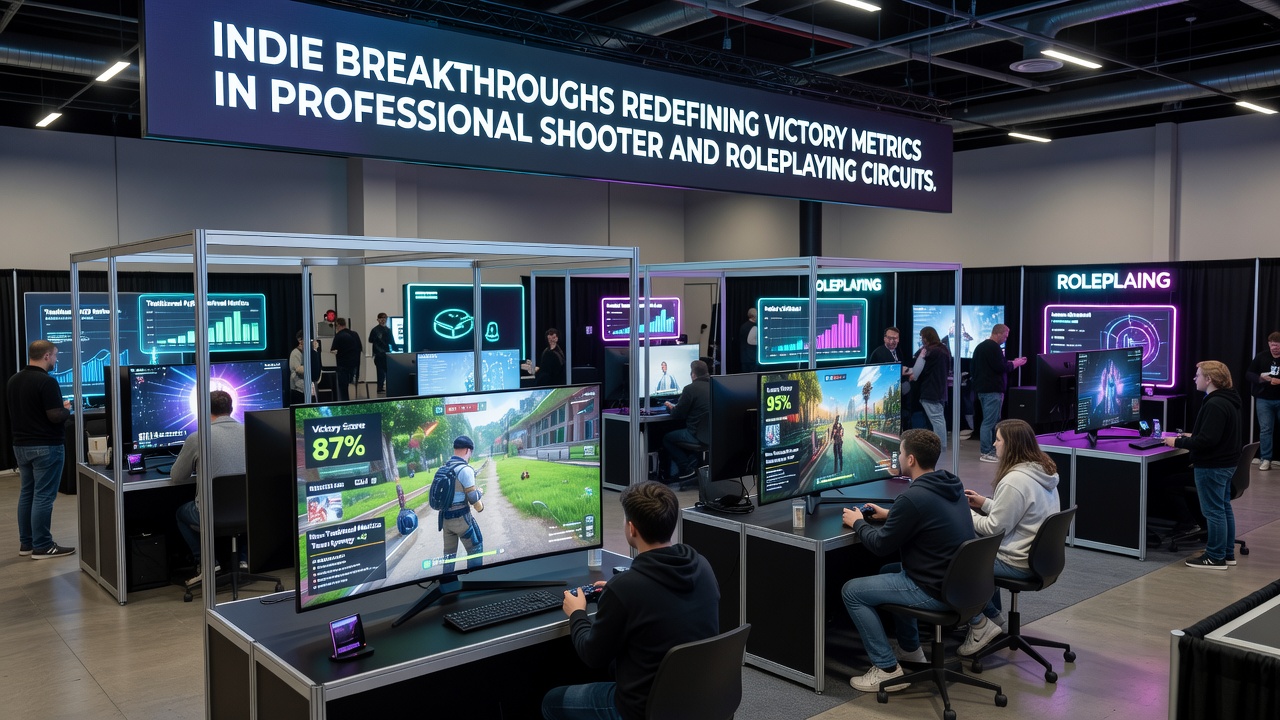
Take the case of a European tournament series that integrated indie-developed scoring software in March 2026, where squads received bonuses for completing in-game story arcs during live matches. The software logged these achievements in real time, and data from that series revealed a 12 percent drop in early-round forfeits because players remained engaged through secondary objectives. Similar implementations appeared in Canadian events later that summer, where role-playing circuits incorporated shooter elements like timed objective captures that contributed to overall narrative resolution scores. These adjustments created pathways for smaller teams to advance even when raw firepower metrics lagged behind larger organizations.
Regional Circuits Adapt Differently
North American organizers have leaned toward quantifiable combat hybrids, whereas circuits in the Asia-Pacific region emphasize storytelling milestones that carry equal weight to elimination tallies, according to records maintained by regional gaming associations. This divergence means players traveling between continents must recalibrate strategies quickly, and evidence from cross-circuit data exchanges shows that preparation time for international events increased by an average of nine days in 2026. Yet the core principle remains consistent: victory now encompasses a broader set of achievements that indie developers originally prototyped in smaller-scale releases before scaling them for professional use.
Technical Integration and Tracking Tools
Software platforms developed by independent teams supply the backend tracking that makes these metrics feasible at scale, and several circuits integrated these tools after initial pilots proved reliable under high-stakes conditions. Metrics include completion percentages for branching dialogue trees alongside traditional accuracy percentages, which together determine final placements. Studies conducted by academic groups in Japan tracked how these combined scores affected match duration and found that games extended by an average of seven minutes when narrative layers remained active, giving spectators extended viewing windows without altering core pacing rules.
Conclusion
Professional circuits continue to refine these victory definitions as more indie innovations reach competitive stages, and the pattern suggests that future seasons will further blend shooter execution with role-playing progression into unified evaluation frameworks. Data collected through September 2026 already shows measurable shifts in how rankings are calculated, and ongoing collaborations between organizers and independent developers point toward continued evolution in how success gets quantified across both genres.